Window of Archipelago

La Galigo - Similar to the Koran but older than the Koran

Ujungpandang ( Dreamland Library ) - The Bugis in South Sulawesi, adheres to a belief in the Gods of Seuwae (the Only God). "The Bug...

Showing posts with label Place Names. Show all posts

Relations between Java and Israel

Jerusalem Israel
Jakarta (DreamLandLibrary) - A Glimpse of the Red Thread that was begun by Emha Ainun Nadjib Visit to a Jewish Place of Worship

Zwolle Synagogue
Windesheim The Synagogue Manager Ingrid Petiet welcomed the group from Emha & Kiai Kanjeng, Noe Letto, to join the visit. After a short talk, the group was immediately guided into the synagogue room and, like a tourist guide, Ingrid painfully explained the rooms inside.

Sometimes there are also small dialogues between Ingrid and Cak Nun and Noe Letto which makes the conversation more interesting.

Zwolle seems to have diverse community characteristics, and until now has consistently maintained social security, because in that region there are various ethnicities such as Turkish, Moroccan, and many more.

In 2003 Sianagog Zwolle sent his leaders to participate in a dialogue program of three religions (Judaism, Christianity, Islam) in the city of Zwolle. With the spirit of love, Cak Nun and his entourage were present, bringing with them a sense of friendship and tolerance that are highly valued.

Ingrid seemed to want to convince the group that he as the organizer of the Synagogue did not agree with the various issues and negative connotations against the Jews.

As a Jew this disturbed him and wanted to show the spirit of peace that he could also create as a Jewish people. Ingrid believes that there are many similarities between the three holy religions in the world, namely Islam, Christianity, and Judaism.

He then gave an example of the greeting spoken by adherents of Judaism, Christianity, and Islam is from the same word; GREETINGS, the difference is only in the dialect of the speaker.

Cak Nun added Ingrid's opinion that in Islam, greetings means "I pledge that you are safe and not threatened with me. The fact that we can dialogue with an atmosphere of peace is also an expression of the word salama, shalom.

Javanese and Jewish English then invited the group to enter another room which they considered sacred. Rarely do guests have the opportunity to enter this room, who knows on what basis Ingrid invited us to get to know the place of worship.

In this room all male visitors are required to wear Jewish hats, as is Kiai Kanjeng except for Cak Nun, who still wears the white Kopyah of her Maiyah.

Every room looks manicured, clean, until a special place is welcome to sit and return to dialogue with a more focused topic. Ingrid tells the story of three of Israel's sons, Abraham, Isaac, and Jacob, all three of whom are considered to be the forerunners of the nation of Israel.

Jacob is often also called Israel, and then one of his 12 children is preserved as a Jewish identity, Jew of the name Judah.

This statement was immediately received quite well from Cak Nun, he even revealed the need for a serious and comprehensive research into the possibility of a historical relationship between Javanese and Jews. Because when spoken, the two words are almost the same in pronunciation.

Java-Jaffa, Javanese-Jewish. Please note that there are many cities in Israel that use the word Jaffa as important areas, for example Jaffa Tel aviv and many more.

Cak Nun also pointed out several things that found indications of Javanese "involvement" in certain parts of the Jewish area.

Like getting a very valuable information Ingrid looks surprised and very captivated by the exposure of Cak Nun. He considered it a historical phenomenon that should not be ignored, then he also agreed with the proposed research.

One of the Cak Nun missions in the Synagogue seems to provoke a search effort that if properly realized could become a new history of the development of modern human civilization now.

Source:
http://kanjengkiai.multiply.com/journal/item/11?&show_interstitial=1&u=%2Fjournal%2Fitem


Photo: Special

The relationship between Zabag in Sumatra. and Zanzibar

South Africa East Coast
Jakarta (Dreamland Library) - In Africa there is also a community called Zanj which dominated the east coast of Africa for most of the first millennium BC.

Then who is Zanj, whose name is the origin of the Azania, Zanzibar and Tanzania names?

Not much known. But there are clues that direct the similarity of Zanj Africa with Zanaj or Zabag in Sumatra.

Source:
http://www.armhando.com/2012/02/bukti-pelaut-nusantara-lebih-hebat-dari.html
Photo: Special

Relations between Lake Tempe in Sulawesi and City of Tempe in Arizona

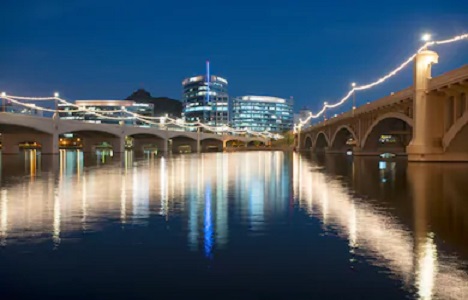
Tempe Town Lake Arizona
Jakarta (Dreamland Library) - Maybe the two places do not have a direct relationship, but friends in the community decide to make it an archive. So if one day a significant relationship is found, we already have a little info.

Arizona in the United States
Tempe is a city in Maricopa County, Arizona, United States of America, with a population of more than 175,000 in 2008.

The city is located in the eastern part of the Phoenix Metropolitan Valley Area, bordered by Phoenix and Guadalupe to the west, Scottsdale to the north, Chandler to the south, and Mesa to the east.

And the City of 'Tempe' is the location of the headquarters of the American airline US Airways Group and has the oldest and largest Arizona State campus in Arizona.

Source:
http://situsaja.blogspot.com/2012/03/7-hal-di-dunia-yang-namanya-berbau.html

While Lake Tempe in South Sulawesi is "Lake Purba", meaning possible the name Tempe, although both the lake is a duplicate of Lake Tempe Purba.

Photo: Special

A Little Story About SundaLand (Atlantis the Lost Civilization)

Kanguru
Jakarta (Dreamland Library) - When we board an airplane towards Australia, we often run into other planes, in the air, which has a picture of a jumping Kangaroo on its tail.

This picture is always on every Australian flag-carier plane that considers the Kangaroo to be the continent's endemic animal.

But in fact the Kangaroo also exists in Papua, an area that belongs to the administrative territory of the Unitary Republic of Indonesia. People must ask, who brought the Kangaroo to Papua?

No need to go far, the Kangaroo tribe, the Aboriginal tribe is actually also a native of Papua. Who told the Papuans to move to Australia and call themselves Aboriginal?

When the sea water was still below the Sundaland plain, there was also a non-submerged plain that connected Australia and Papua, namely the Arafuru sea plain that extends west to the Timor sea plain; the Arafuruland plain.

This plain is similar to the Sundaland plain. All Papuan tribes once lived in the vast plains of Papua and Australia, including the Kangaroo.

When sea water overflows occur, the life community on the plains between Papua and Australia is scattered up to higher regions, partly to Papua and partly to Australia, the Kangaroo also runs away from water partially to Papua and as to Australia.

The indigenous Papuan civilization community living on the Arafuru sea plain and the people living in the Sundaland plain have been neighbors for a long time, so that the integration of the territory into

The Republic of Indonesia is actually also symbolic of the greatness of civilization during the glorious Sundaland period. The Sundaland plain and the Arafuru sea plain are limited only by small seas along the Maluku basin-shaped from top to bottom, passing through the Banda sea gap to the Timor gap with Nusa Tenggara, this is like when we were in Singapore waving to Malaysia, or like Banyuwangi people shouting to his girlfriend in Bali through the Bali strait.

Now Australia which is controlled by Caucasians like Europe has more history in this region and tries to occasionally force the will. They are guests, and the cultural roots of civilization in this region will belong to the region's own regional community.

The great roots of civilization will not really disappear. Whose name is a root, which has lasted a very long time, will grow and grow, displaying the story of its past back in the future. Indonesia - other countries like it or not - will grow up to repeat the story of the greatness of Sundaland's Arafuruland civilization.

The burial of a giant civilization beneath the sea floor of Java is still surrounded by supernatural turmoil, which will have positive influences about the desires of the ancestors that have not been fulfilled in his past life: progress and greatness must return to its roots and their owners. And because those who live in this haunted and mystical region are now called Indonesia, this country will go far beyond what the VOC caliber invaders ever imagined whose origins are unclear.

The story of the greatness of the kingdom in just a hundred years ago is a "simple" story, no more than a teaser or opening credit tittle if compared to a film. But the real story hasn't been explored yet. The curse of the Sundaland plain will affect the entire life of this country.

The Papua region which is included in the Unitary Republic of Indonesia will be more advanced and prosperous than the Papua New Guinea region. The rights of ethnic Papuans who enter the territory of the Republic of Indonesia will be more respected by the state when compared to the rights of Aboriginal people in Australia. This will happen because we've been close neighbors even since the ice age!

The whole soul and body of the Sundaland ancestors who were swept away on the bottom of the Java Sea will guide whoever is leading the people in this region, whoever the country is in this region. Indonesia will be the world's lighthouse! Qibla direction will lead to Indonesia. People who used to get out of the Sundaland plains due to the flood, and scattered to higher regions will feel a very longing for this country, our country!

Changes in civilization in the future may not be in the form of freezing as in the ice age, but can also be in other forms. In the ice age, the Sundaland plain is a paradise of good living because it is located on the equator and is illuminated by the sun all year long.

At present, the necessities of life, ranging from natural resources and non-natural resource products to the needs of migrant workers, may be supplied by Indonesia. Indonesia will be seen as a place where other countries even really want us to express their opinions on the problems they face.

During the ice age, this country was known as a warm country. At present, "warmth" is transformed into something broader meaning. And this will be seen more clearly in the next few decades.

For now let us see only the momentum points that form the foundation stone for starting all the stories of the greatness of Sundaland: in the G-20, our economy defeats the Netherlands and Spain soon, the world's largest Muslim community and at the same time the world's largest democracy . This is just an opening. Indonesia is currently the world's largest oxygen supplier!

Most of the forest throughout the year gets full sunlight and this provides a large supply of oxygen in global terms. If we stress and cut down all the forests in this equatorial tropics, the world will collapse! This is a small piece of evidence, or it can also be called a symbolization, how even today the global living environment really needs an area called Indonesia.

Symbolization of the past also, how the Sundaland plain region also became an area that provides a very global place to live. East Javanese may glorify Majapahit. Sumatran people may glorify Srivijaya. Kalimantan people may glorify Kutai. Papuans can leave their kings and tribes alive.

All of that is just fragments. What unites all of them is the spirit of the Sundaland ancestors and the ancestors of the plain of Papua who are also submerged by the flood in the Arafuruland plain. Soon an embodiment of civilization that is larger and global will be formed, beyond the borders of the country in eastern Papua or in the north of Borneo.

An infinite boundary and the TNI does not need to send Leopard tanks to guard it. The boundaries that can never be colonized by anyone, because this has been printed on the plates of the earth, has been carved geologically by a mighty power.

This country should probably not only commemorate August 17th as independence day as a nation, but also need to carry out a national ritual of sowing flowers and mourning over the Java sea as a tribute to Sundaland civilization and also carried out over the Darwin strait or the Arafuru sea as a tribute. for the Papuan civilization that sank in the Arafuruland plain!

They are sincere that the plain must be inundated with water similar to a high mountain:

 "Let my children save themselves and scatter with the other children throughout the face of the earth, to the high places and breed there. Later, in the near future and in a very long time, they will return to this place and understand that the civilization they knew during their lives began here.

They will return and serve in the lap of the motherland! "

By: Firman Mawero


Photo: Special

Relations between Makassar and Madagascar

Masyarakat Madagaskar
Jakarta (Dreamland Library) - From its physical stature most of the population of Madagascar looks different from the population of Africa in general. The inhabitants of Madagascar are more similar to the Malay family than the Negroid race. From the research conducted in Genecology, it was found that the population of Madagascar still had gene linkages with tribes in the archipelago. This similarity is because the people of the archipelago and Madagascar are still Austronesian family.

That the language used by the Malagasy people in Madagascar is the Barito language, southeast Kalimantan. Malagasy language is related to the languages ​​used by Maanyan, Witu Hamlet, Paku, Samihim and Lawangan. This thesis was first proposed by Dahl (1951: Malgache et Maanyan, Une Comparaison linguistique, Egede Instituttet, Oslo). Adelaar's research confirmed Dahl's thesis (1951). Adelaar also stated that many Malagasy languages ​​had loan words from Malay, Javanese and South Sulawesi.


Some Indonesian special plants which are also not spared there, such as plantain, sweet potato, taro and corn. According to research by George Murdock, an American professor in 1959, the plants were brought by Indonesians while traveling to Madagascar.

Malay migration arrived in Africa. Some time ago I had read a book (I forgot the title) about the Nusantara colonies in East Africa. According to the writer, that the archipelago nation (Malay) had already established trade relations with nations in Africa, not only did they trade, they also made colonies on the continent. They preceded Europeans for several centuries.


Swarnadwipa which means Gold Island is another name for Sumatra. This can be seen in the Hindhu legend of the Archipelago. According to Robert Dick, the amount of gold in Sumatra was brought by Zanj and Indonesian sailors from Zimbabwe, Africa. Because Dick also found evidence that said gold mines in Zimbabwe were originally pioneered by Nusantara seamen who came there. Some did not return and form the Afro-Indonesian race. Maybe this race is called Zanj.


Gajah Mada and its adventures to the West Linking the Javanese with Madagascar is indeed less popular, this is because of the unknown maritime traditions of the Javanese. But there is one interesting story that is often associated with the existence of Javanese people on the fourth largest island in the world is the story of Mahapatih Majapahit Gajah Mada. Gajah Mada, who is said to have been off duty and was awarded land in Madakaripura (East Java Probolinggo area), led the expedition to sail westward, stopping briefly in Lampung and then continuing to sail to the island of Madagascar. The fact is that until now no one knows where Gajah Mada was buried. So the possibility of this theory is true, Gajah Mada led the expedition so far up to Madagascar that it was impossible to return to Majapahit (Indonesia now) and finally settled in Madagascar until the end of his life.


Gajah Mada sailed along with his troops, stayed and married with local residents. Because this country is no stranger to the country in the archipelago, so Gajah Mada and its troops chose to settle on this island. There is another opinion that says the origin of the name Madagascar comes from the name Gajah Mada = Mada Gaskar.

Makassar seamen penetrate the Indian OceanDr. Cyril Hromnik an American historian who examined the history of South Africa in a book he wrote in 1982 stated that in the first century to X Indonesians from the oldest kingdom in South Sulawesi (The ancient state) brought workers to South Africa to be employed in the gold mining company. Some of them were stranded in Madagascar and formed a colony there. Experts agree that the oldest kingdom is Luwu. (Previously, please look at my writing entitled Luwu in the History track).


The word Makassar I use represents the tribes around Sulawesi such as Luwu, Bugis, Makassar, Mandar, Bajo, etc. The maritime greatness of the Makassar people is no doubt with phinisi boats that are not as big as European boats, Makassar people can go back and forth in the Indian Ocean. With the title as an international trading port, Makassar port is very crowded with spices from Africa. The spices were brought by Makassar sailors and other Indonesian sailors and from Europe.

In the Magasy language in Magaskar there are several vocabularies that are similar to the Makassar Bugis language such as the word Matua (old) etc. The greatness of the voyage was repeated in the 1991 Amana Gappa expedition sailed for Madagascar.

Judging from the name Madagascar it is possible that this name is taken from the name Makassar.

Source: 
http://sejarah.kompasiana.com/2010/12/28/madagaskar-jejak-nusantara-di-timur-afrika/

Photo: Special

Testimony from Dreamland Community Members

When he took his Masters in politics at the National University of Jakarta (1988), he sat in the same class as a student from Madagascar (who graduated from S1 IAIN Jakarta University)

His Madagascar friend told me in Indonesian very fluently, that he believed his ancestors were from Makassar.

Arabic Culture Turns Inheritance from Christian Religious Culture